THE CARTEL BOSS’S SON ATTACKED EVERY NANNY WHO CAME NEAR HIM / Chapter 3 / 12
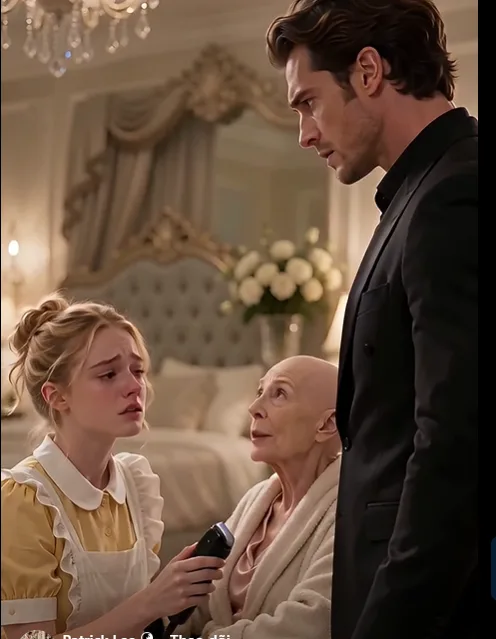
Mafia boss Bennett Hale thought the young maid in his mansion was only there to clean, until he came home early and found her crying beside his dying mother, gently shaving away the last of her hair.
At thirty-two, Bennett Hale had learned how to make an entire city lower its voice.
In Chicago, his name traveled through expensive restaurants, private clubs, shipping offices, courthouse corridors, and back rooms where men never wrote anything down. It traveled in the pause before a rival answered a telephone call. It traveled in the sudden closing of a warehouse door. It traveled through the eyes of a man who realized, too late, that the person sitting across from him already knew every lie he intended to tell.
Bennett had inherited an empire built on shipping, real estate, political leverage, and fear. Five hundred million dollars moved through the Hale organization in one form or another, enough money to purchase almost anything a man could reasonably want.
He had purchased cars.
Houses.
Silence.
Loyalty.
Doctors.
Lawyers.
Men willing to stand outside a door all night with weapons beneath their coats.
What he had never managed to purchase was peace.
The afternoon sun cut through the tall arched windows of his Lake Forest mansion like pale blades of amber. Dust moved slowly through the light. Somewhere in the east wing, a clock marked each passing minute with a restrained, almost apologetic tick.
Bennett had returned from downtown two hours earlier than expected.
His black trench coat still smelled faintly of rain, wet asphalt, expensive tobacco, and the metallic scent that seemed permanently embedded in the world he occupied.
He crossed the marble foyer without speaking to anyone.
The guards straightened when he passed.
He barely noticed.
His mind was on the next shipment, the upcoming board meeting, and the latest report from the docks.
Then he heard laughter.
He stopped.
The sound was so unexpected that for several seconds he simply stood there.
Laughter.
Not the polite sound his mother gave doctors when they asked how she was feeling.
Not the faint courtesy she offered nurses.
Not the brittle amusement she manufactured whenever Bennett entered the room and pretended everything was fine.
This laughter was different.
Warm.
Uncontrolled.
Alive.
It belonged to someone who had forgotten to be afraid.
Bennett slowly turned toward the east wing.
For one impossible moment, he was twenty years old again.
His father was alive.
His mother was strong.
The house was full of music.
There were no armed guards at the ends of the corridors. No medical carts. No quiet conversations about tumors and treatment plans.
Then the memory vanished.
He walked toward the sound.
The door to his mother's bedroom stood half open.
Through the gap he saw Clara Reed.
She was kneeling on the hardwood floor.
She wore the yellow housekeeping uniform assigned to the estate staff, the skirt gathered beneath her knees. Her golden-brown hair was twisted loosely behind her head, several strands escaping around her face.
In her right hand was a black electric razor.
A white towel covered Eleanor Hale's shoulders.
Silver hair lay across it.
Long strands.
Short strands.
Fragments of the woman Eleanor had once been.
Bennett froze.
His mother sat in her velvet wheelchair, her body reduced by illness to something painfully fragile. Eight months earlier she had been diagnosed with stage-four pancreatic cancer. Eight months earlier Bennett had reacted exactly as he reacted to every threat in his life.
He had attacked it.
He had hired specialists.
He had flown doctors across the country.
He had purchased experimental treatment.
He had imported medication.
He had installed private medical equipment worth more than some hospitals.
He had spent millions trying to defeat something money could not even frighten.
And in eight months, he had almost never sat beside his mother while she cried.
Now Clara was crying for her.
Tears ran silently down her cheeks as she guided the razor over Eleanor's scalp.
"I'm almost finished, Mrs. Hale," Clara whispered.
Eleanor reached up and caught Clara's wrist.
"Stop talking to me like I'm five, child."
Clara laughed through her tears.
"You're being difficult."
"I'm dying. I've earned the right to be difficult."
"That's true."
"Then stop arguing."
"I wasn't arguing."
"You were."
Clara shook her head.
Another lock of silver hair fell.
Eleanor smiled.
A real smile.
Bennett stared.
It was the first time in months he had seen his mother look like herself.
He should have entered.
Instead, he stepped backward.
He walked away.
The sound of the electric razor followed him down the corridor.
For the first time in his adult life, Bennett Hale felt ashamed of the fact that he had money.
Not because money was evil.
Because he had used it as an excuse.
He had convinced himself that paying for care meant giving care.
He had confused maintenance with love.
His mother had needed her son.
He had given her doctors.
The distinction was suddenly unbearable.
An hour later, Clara entered his study.
She had changed into a clean yellow uniform. Her hair was tied back neatly, but the dark circles beneath her eyes remained.
Two armed men stood outside Bennett's office.
Clara noticed them.
She noticed everything.
She stopped three paces from the desk.
"You asked to see me, Mr. Hale?"
Bennett leaned back.
The study smelled of leather, cedar, and cold coffee.
He folded his hands.
"You were hired six months ago."
"Yes, sir."
"Your duties were cleaning the upper galleries, guest suites, and linen rooms."
"Yes."
"Then explain why I found you shaving my dying mother's head."
Clara's fingers tightened around each other.
But she didn't look away.
"Because she was frightened."
"She has four private nurses."
"I know."
"Two palliative specialists."
"I know."
"They're responsible for her medical care."
"They're responsible for her body."
Bennett's eyes narrowed.
Clara took a breath.
"They aren't responsible for whether she feels alone."
Silence.
She continued.
"She woke up three nights ago because her pillow was covered in hair. She tried to hide it."
"From me?"
"Yes."
"Why?"
"Because she didn't want you to see."
Bennett's jaw tightened.
Clara looked down.
"She doesn't want you to remember her as sick."
The words struck harder than they should have.
"What else?"
Clara hesitated.
Then she said, "She likes peppermint tea."
Bennett frowned.
"Two drops of clover honey," Clara added. "Not three. Three makes it too sweet."
He said nothing.
"She hates the blue blanket."
"What?"
"The blue blanket. It scratches her neck."
Bennett stared at her.
"She likes the window open when it rains."
He felt something cold move through his chest.
"You know all this?"
"I sit with her."
The simplicity of the answer nearly broke him.
Before he could respond, the door opened.
Eleanor entered in her wheelchair.
"Bennett."
He straightened.
"Mother, you shouldn't be out of bed."
"The doctor works for you."
"He told you to rest."
"He tells you what your money wants to hear."
She rolled toward Clara and took the young woman's hand.
"Clara tells me the truth."
Bennett looked between them.
"I am trying to keep you alive."
Eleanor smiled sadly.
"I know."
"I've brought the best doctors in the country."
"I know."
"Whatever you need, I'll provide."
"That's exactly your problem."
The room became very still.
Eleanor looked at her son.
"You think providing is the same thing as being present."
Bennett's expression hardened.
"That's unfair."
"No."
She squeezed Clara's hand.
"What's unfair is that this girl knows more about my fears than my own son."
Clara lowered her eyes.
Eleanor continued.
"If you fire her, I leave with her."
Bennett stared.
"You can't be serious."
"I have never been more serious."
"You're threatening to leave your own home?"
"I'm threatening to leave my cage."
Clara's face went pale.
"Mrs. Hale…"
"You promised," Clara whispered.
Eleanor looked at her.
"You promised you wouldn't tell him."
"No."
Eleanor's voice softened.
"I promised I would protect you."
Then she turned toward Bennett.
"But I also promised your father."
Something in Bennett changed.
His instincts sharpened.
"What does that mean?"
Eleanor looked toward the windows.
The sunlight had almost disappeared.
"Eight years ago," she said, "your father didn't die the way you were told."
Bennett felt his heartbeat change.
"Arthur Hale was shot at Calumet Harbor."
The room seemed smaller.
"And the man who tried to save him was Thomas Reed."
Clara closed her eyes.
Bennett looked at her.
Thomas Reed.
The name was buried somewhere in his memory.
A warehouse manager.
A loyal employee.
A man who had died during a violent confrontation at the docks.
Bennett had remembered almost nothing about him.
That realization made him feel sick.
"My father knew him?"
"He trusted him."
"What happened?"
"Thomas took the second shot."
Bennett stared at his mother.
"Richard Croft told me Thomas's family received the settlement."
"They didn't."
His breathing slowed.
"What?"
"Richard stole it."
The silence that followed was enormous.
Bennett remembered signing a document eight years earlier.
A death benefit.
Five hundred thousand dollars.
He had never questioned it.
He had assumed the family had received the money.
He had assumed the matter was finished.
Clara spoke quietly.
"We never received anything."
Bennett looked at her.
"My mother worked herself sick."
Her voice shook.
"Our house was foreclosed."
She swallowed.
"She died three years ago."
Bennett's eyes dropped to Clara's hands.
Calluses.
Small scars.
Hands that had cleaned his house.
Hands that had held his mother's trembling fingers.
Hands that had belonged to the daughter of the man who died protecting his father.
"I grew up working," Clara continued. "I worked nights. I cleaned offices. I studied during the day. I found my father's journal after my mother died."
She reached into the pocket of her uniform and pulled out a folded photograph.
"This was him."
Bennett took it.
Thomas Reed stood beside a warehouse crane, younger than Bennett had imagined.
His hand rested on Arthur Hale's shoulder.
Both men were smiling.
Not business smiles.
Friends.
Bennett looked at the photograph for a long time.
"I came here because I hated your family," Clara said.
He looked up.
"I wanted to know what kind of people lived in a house like this."
Her eyes moved toward Eleanor.
"Then I met your mother."
A tear escaped.
"I couldn't hate her."
Bennett had no answer.
That night he began dismantling Richard Croft's life.
He didn't do it with rage.
Rage was inefficient.
He did it with evidence.
Thirty-six hours passed.
Accountants worked in the basement.
Attorneys arrived.
Servers were seized.
Bank transfers were reconstructed.
Offshore companies were traced.
Croft had stolen more than Thomas Reed's death benefit.
He had stolen millions.
He had forged signatures.
He had manipulated trusts.
He had sold information to the Moretti syndicate.
And eventually they found the communications connecting him to the ambush that killed Arthur Hale.
At two in the afternoon on Friday, Bennett called the board meeting.
Richard Croft walked into the tower believing he was untouchable.
He wore a charcoal suit.
Gold-rimmed glasses.
A calm smile.
"Bennett," he said. "I heard your mother isn't doing well."
Bennett placed a bank document on the table.
Croft stopped smiling.
"You remember this?"
Croft stared at it.
"It's an administrative matter."
"No."
Bennett's voice was quiet.
"It's Thomas Reed's money."
Croft swallowed.
"I don't know what you're suggesting."
"You forged his widow's signature."
Silence.
"You stole the settlement."
Croft looked around the room.
"Your father understood how these things worked."
Bennett's eyes hardened.
"Don't use my father's name to excuse what you did."
Croft began to sweat.
"Your father wasn't innocent."
"I know."
Bennett leaned closer.
"That's why I'm not pretending this is about revenge."
He tapped the folder.
"It's about accountability."
Croft's face collapsed.
Federal investigators entered minutes later.
Bennett watched them take him away.
He felt no triumph.
Only exhaustion.
That evening he returned home.
Clara was sitting beside Eleanor, reading poetry.
The room smelled of peppermint tea.
Bennett placed a folder on the table.
Clara looked at it.
"What is that?"
"Your father's estate."
She opened it.
Her eyes widened.
The restitution included money, land, company equity, and a foundation.
Clara shook her head.
"I can't accept this."
"It's not mine to give."
She looked at him.
"It belonged to your father."
"No."
Bennett's voice softened.
"It belonged to Thomas."
Her lips trembled.
"This is too much."
"Your father gave his life."
He looked at Eleanor.
"And my family allowed you to pay the price."
Clara closed the folder.
"I don't know what to say."
"You don't have to say anything."
Three weeks later, Eleanor Hale died.
She died with Clara holding one hand and Bennett holding the other.
There were no machines.
No specialists.
No frantic orders.
Just the fireplace.
Snow beyond the window.
Peppermint tea.
Eleanor looked at her son.
"You were always trying to protect me."
Bennett couldn't speak.
She smiled.
"You were just protecting me from the wrong thing."
He bent his head.
A tear fell onto her hand.
"Don't let the darkness take you."
"I won't."
She looked at Clara.
"You brought music back into this house."
Clara cried.
Eleanor smiled.
"Take care of him."
"I will."
Eleanor's eyes closed.
Her breathing slowed.
Then the room became silent.
After the funeral, Bennett did what nobody expected.
He dismantled the Hale syndicate.
Not overnight.
Not recklessly.
He converted legitimate businesses.
Closed criminal channels.
Released men who wanted out.
Created severance funds.
Turned the port operations into a lawful logistics enterprise.
And the eastern wing of the estate became a medical sanctuary.
Clara became its director.
Two years passed.
The house changed.
The guards became fewer.
The gates opened.
The rooms filled with children.
The place that had once felt like a fortress began to feel like a home.
Bennett and Clara eventually married.
Their daughter was named Eleanor.
And for a while, peace seemed possible.
Then the past came back.
It came on a cold October morning.
Bennett was standing at Calumet Harbor when Marcus found him.
The memorial to Thomas Reed had been vandalized.
A photograph of Clara had been left behind.
A letter carried the Moretti seal.
Julian Moretti had returned.
Dominic Moretti's younger brother.
A man who had spent years moving contraband through Europe.
A man who believed the old empire still belonged to him.
The message was simple.
Surrender the southern terminals.
Or Clara would pay.
Bennett stared at the photograph.
His wife's face.
Her smile.
Her complete ignorance that someone had been watching her.
The old Bennett returned for one brief second.
Then he disappeared again.
Because he had something worth protecting now.
Not an empire.
A family.
When Bennett showed Clara the photograph, she didn't panic.
She studied it.
"How long?"
"Seventy-two hours."
"What do you want me to do?"
"Stay home."
She looked at him.
"No."
"Clara."
"If I hide behind the gates every time someone threatens us, then the clinic becomes exactly what we fought against."
"You're not understanding."
"I understand perfectly."
She touched his face.
"I'm not your weakness, Bennett."
His eyes closed briefly.
"I know."
"Then stop treating me like one."
The next morning, the clinic was attacked.
The assault lasted less than a minute.
The children were protected.
The attackers were stopped.
And Clara, forced to defend herself, proved that she was no longer the young woman who had entered Bennett's house trembling beneath a yellow uniform.
Afterward Bennett held her.
His hands shook.
Not from fear for himself.
For her.
"You could have died."
"So could you."
"I don't care about me."
"I do."
That silenced him.
She pressed her forehead against his.
"You don't get to save everyone except yourself."
The investigation led to Calumet Harbor.
Julian was waiting on a vessel.
Bennett went there with Marcus and federal agents.
Snow swept across the docks.
Julian tried to provoke him.
He talked about Arthur.
About Dominic.
About the old empire.
About blood.
Bennett listened.
Then Julian's weapon failed.
The moment was over.
Bennett could have ended it himself.
Instead, he stepped back.
Federal officers moved in.
Julian was arrested.
The harbor trust was certified.
Thomas Reed's name was legally attached to the property forever.
The old war was finally over.
But Bennett's story did not end with revenge.
It ended with construction.
A medical campus rose in Cicero.
Then another clinic.
Then another.
Clara's foundation expanded into neighboring counties.
Pediatric treatment.
Hospice care.
Family housing.
Mobile medical services.
The wealth that had once created fear began creating doors.
One September morning, three years after the opening of the Thomas Reed Medical Campus, Bennett stood beside Clara at the dedication ceremony.
Their daughter, Eleanor, was three years old.
Clara held her on one hip.
The little girl wore a yellow dress and kept trying to reach for the microphone.
The crowd laughed.
Clara smiled.
She looked at Bennett.
For a second he saw the young woman in the yellow housekeeping uniform again.
Only now she stood beneath a banner bearing her father's name.
She had not inherited a throne.
She had transformed one.
After the ceremony, they walked through the atrium.
Doctors passed them.
Nurses waved.
Parents thanked Clara.
Children laughed.
Bennett watched all of it.
He realized he no longer recognized the man who had once owned this city.
That man had believed strength meant control.
This man understood that strength could also mean surrendering control to something better.
That evening, Bennett returned to the estate.
The house smelled of peppermint tea and fresh roses.
The east wing, once his mother's sickroom, had become a creative sanctuary for children receiving treatment.
Clara sat near the window with Eleanor in her lap.
She was reading poetry.
The same book.
The same room.
A completely different life.
Bennett stood in the doorway.
Clara looked up.
"What are you thinking?"
He smiled.
"My mother."
Clara closed the book.
"And your father?"
"And Thomas."
She looked toward the lake.
"What do you think they're saying?"
Bennett sat beside her.
"Probably arguing."
"About what?"
"Who was more stubborn."
Clara laughed.
"Definitely Thomas."
"Definitely my mother."
Their daughter crawled into Bennett's lap.
He held her.
Outside, the gates stood open.
The house was no longer a fortress.
It breathed.
Years later, another discovery would come.
Marcus brought Bennett a small wooden box from the federal archives.
Inside were two medals.
Arthur Hale's service medal.
Thomas Reed's posthumous medal.
Beside them was the old electric razor Clara had used on Eleanor's final illness.
Bennett touched it.
The room disappeared.
He was back in the corridor.
He heard laughter.
He saw Clara kneeling beside his mother.
He remembered the silver hair falling onto the towel.
He remembered thinking that money could save everyone.
He understood now.
Money could build hospitals.
It could buy medicine.
It could give people choices.
But it could not sit beside a frightened woman at three in the morning.
It could not hold a hand.
It could not forgive.
It could not love.
That was why Clara had changed everything.
Not because she was stronger than him.
Because she had never needed to become hard in order to survive.
She had suffered without allowing suffering to define her.
She had lost without becoming cruel.
She had inherited pain and turned it into mercy.
Bennett looked toward the garden.
Clara stood beneath the oak tree with Eleanor.
Their daughter was laughing.
Clara's hair moved in the summer breeze.
She looked toward him.
Their eyes met.
She smiled.
He smiled back.
For years, Bennett had thought redemption would feel dramatic.
He had expected some great moment.
A confession.
A victory.
A courtroom.
A final confrontation.
Instead, redemption felt like this.
Sunlight.
Children.
An open gate.
Peppermint tea.
A woman who knew the worst things about him and still believed he could become better.
The lake shimmered beyond the trees.
Bennett walked toward Clara.
She reached for his hand.
He took it.
And for the first time in his life, he didn't look behind him to see who was coming.
He simply walked home.